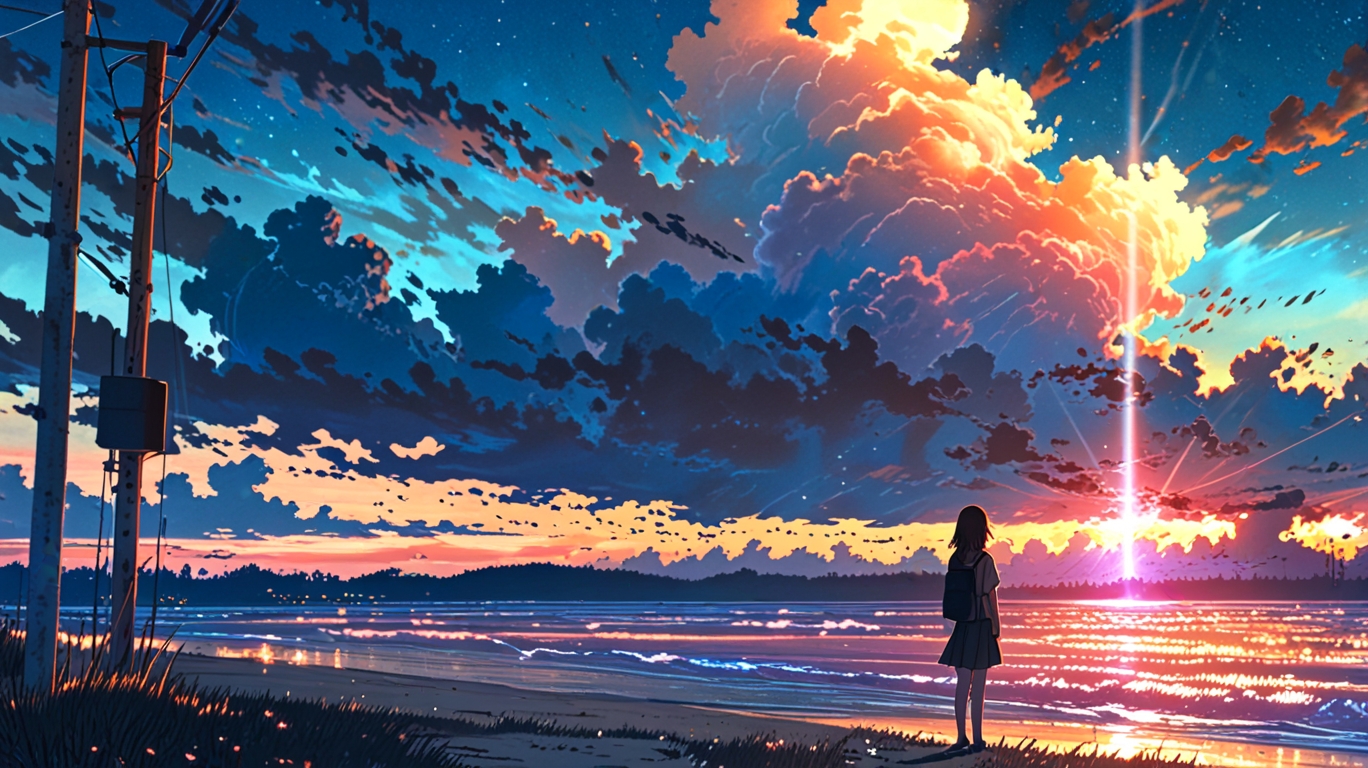
Anime - Japanese animation - has evolved from modest early experiments into one of the world’s most influential entertainment industries. Drawing from traditional Japanese art while absorbing techniques from Western cartoons, anime now reaches billions of viewers through television, cinema, and streaming platforms. Its journey spans over a century, marked by innovation, adversity, and constant reinvention.
Early Days (1910s–1940s)
Anime’s origins trace back to the 1910s, when Japanese artists began experimenting with animation inspired by pioneers such as Winsor McCay. The earliest confirmed anime, Namakura Gatana (1917), was a four-minute comedic short about an inept samurai. During this period, creators Ōten Shimokawa, Seitarō Kitayama, and Jun’ichi Kōuchi - often called the “fathers of anime” produced dozens of short films using chalk drawings, paper cutouts, and early cel animation.
The 1930s introduced sound to Japanese animation with Chikara to Onna no Yo no Naka (1933). During World War II, anime was repurposed as a propaganda tool, culminating in Japan’s first feature-length animated film, Momotarō: Sacred Sailors (1945). After the war, production slowed dramatically as Japan focused on rebuilding amid heavy censorship.
Post-War Revival & the TV Era (1950s–1960s)
The 1950s marked anime’s rebirth. Toei Animation led the charge with The Tale of the White Serpent (1958), Japan’s first full-colour animated feature, heavily inspired by Disney’s style. However, the medium’s true turning point came with Osamu Tezuka, widely known as the “God of Manga.”
In 1963, Tezuka’s studio debuted Astro Boy, the first major weekly television anime series. To meet tight budgets and schedules, Tezuka pioneered limited animation techniques - reusing frames and simplifying motion - which became an industry standard. Astro Boy’s large expressive eyes, dynamic action, and moral storytelling captivated audiences and achieved international success, including in the United States. Anime had officially entered the global stage. Soon after, series like Speed Racer (1967) expanded anime’s reach even further.
Boom and Creative Diversity (1970s–1980s)
The 1970s and 1980s are often considered anime’s golden age in Japan. Economic growth allowed studios to take greater creative risks, leading to an explosion of genres and styles. Giant robot (mecha) anime flourished with Mazinger Z (1972), while Mobile Suit Gundam (1979) introduced a more realistic, war-driven take on the genre. Space operas like Macross (1982) and long-running family series such as Doraemon (1979–present) became cultural staples.
Anime’s artistic potential reached new heights with Akira (1988), whose cyberpunk visuals and mature themes stunned international audiences and reshaped global perceptions of animation. In 1985, Studio Ghibli was founded by Hayao Miyazaki and Isao Takahata. Films like My Neighbor Totoro (1988) showcased anime’s ability to tell deeply emotional, environmentally conscious stories, earning widespread critical acclaim.
Global Explosion (1990s–2000s)
The 1990s propelled anime into mainstream global culture. Dragon Ball Z (1989–1996) defined high-energy shōnen action, Sailor Moon (1992) redefined magical girl storytelling, and Neon Genesis Evangelion (1995) pushed the medium into complex psychological and philosophical territory. Meanwhile, Pokémon (1997) became a worldwide multimedia phenomenon.
Films such as Ghost in the Shell (1995) directly influenced Western science fiction, while Studio Ghibli’s Spirited Away (2001) won the Academy Award for Best Animated Feature - the first anime to do so, cementing anime’s artistic legitimacy on a global stage.
The 2000s saw a shift to digital production, improving efficiency and visual quality. Long-running hits like Naruto, One Piece (1999–present), Death Note (2006), and Fullmetal Alchemist built massive international fanbases. During this era, fan-subtitled releases played a major role in spreading anime worldwide before legal streaming services became dominant.
Streaming and the Modern Era (2010s–Present)
The rise of streaming platforms such as Crunchyroll and Netflix transformed anime into a truly global, on-demand medium. Series like Attack on Titan (2013), My Hero Academia, and Demon Slayer (2019) attracted unprecedented worldwide audiences. Demon Slayer: Mugen Train (2020) went on to become one of the highest-grossing animated films of all time.
Modern anime embraces an unprecedented range of genres, from isekai adventures like Sword Art Online (2012) to sports, romance, horror, and increasingly diverse stories that include LGBTQ+ representation.
As of 2026, anime is a multi-billion-dollar industry producing hundreds of new series each year, influencing fashion, music, video games, and even live-action adaptations. From crude wartime shorts to Oscar-winning films and global blockbusters, anime has grown into a powerful storytelling medium - one defined by visual innovation, emotional depth, and boundless creativity.
Comments
Please login to leave a comment.